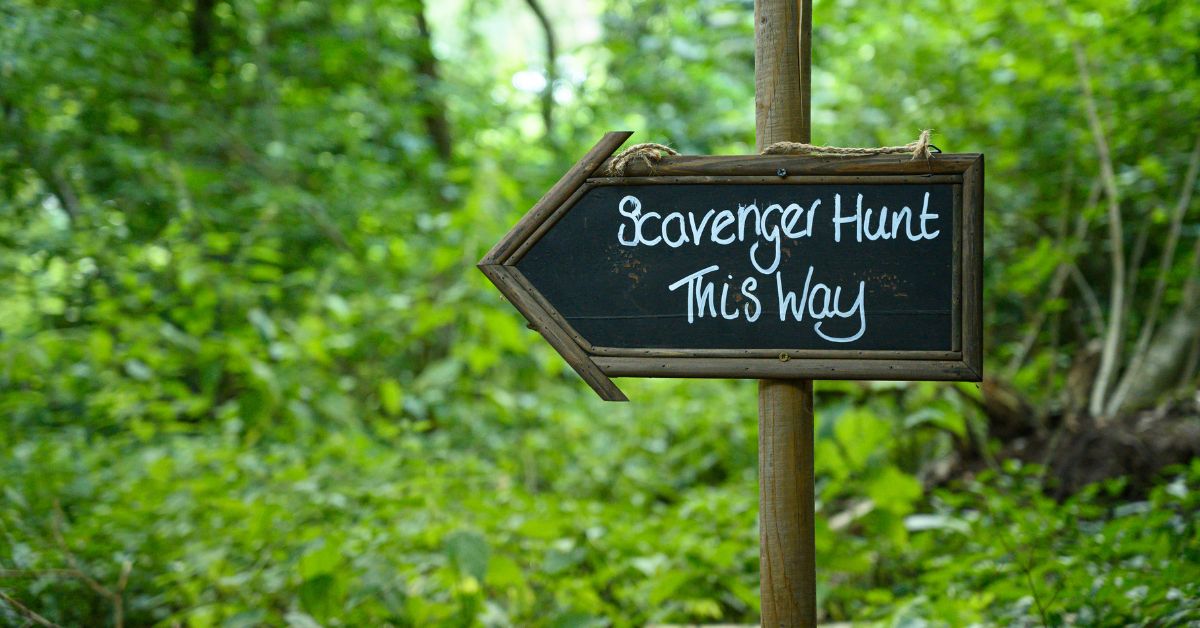
How to Create a Scavenger Hunt

Everything you need to know to create and produce the most intriguing and interesting scavenger hunt.

How to Create a Scavenger Hunt - Swiftriddle
A scavenger hunt is a party game in which the organizers prepare a list of items, clues or tasks to be completed by the participants. The game usually takes place in an urban environment, and often involves taking photographs of the items found. Scavenger hunts are often organized as a way to explore a new city or neighborhood, and can be tailored to any age group or fitness level. This article outlines fun and inspiring ways for how to create a scavenger hunt.
There are many different ways to organize a scavenger hunt, but there are a few essential elements that all successful hunts share. In this article, we’ll walk you through the steps necessary to plan and execute a fun and successful scavenger hunt for your next party or event, and provide some fun and entertaining scavenger hunt ideas to intrigue and thrill participants.

What Is A Scavenger Hunt?

A scavenger hunt is a party game in which the organizers prepare a list of items, decorations, or tasks for the guests to find or complete. The scavenger hunt can be customized for any setting and any age group. To complete a scavenger hunt, guests must search for all of the items on the list. The first person or team to find all of the items wins the game, and in many cases a prize or reward is given to celebrate the winner. Scavenger hunts can be used as birthday party games, team building exercises, or just as a fun way to spend an afternoon with friends. The opportunities are endless, and limited only by your imagination, creativity and energy.

The Benefits Of A Scavenger Hunt

A scavenger hunt can promote teamwork, communication, and collaboration while also teaching problem-solving skills. They can be used in educational settings, corporate team building events, birthday parties, and other social gatherings. Scavenger hunts are a great way to get people moving and thinking creatively.
When planning a scavenger hunt, there are a few things to consider. First, decide what type of scavenger hunt you would like to create. There are many different types of scavenger hunts, from simple treasure hunts to more complex mystery or riddle-based hunts. Once you have decided on the type of hunt you would like to create, consider the setting in which it will take place. Indoor or outdoor? Local or virtual? Nature scavenger hunts are particularly entertaining, and for the more adventurous, can include using compasses and other tools to be extra creative.
Once you have considered the type of scavenger hunt and the setting, it is time to start planning the actual hunt. Begin by coming up with a list of items or tasks that participants will need to find or complete during the course of the scavenger hunt. Make sure that the items on your list are achievable and appropriate for the setting and age group of your participants. You may also want to consider creating different levels of difficulty so that everyone can participate and be successful.
After you have created your list of items, it is time to create clues or instructions that will lead participants from one item to the next. If you are using physical objects as your clues, hide them in appropriate places around the chosen location. If you are using virtual clues, send them out via email or text message. Make sure that your clues are clear and easy to follow, and don’t require too many questions of the organizer in order to be followed.
Finally, select a prize or prizes for the winners of your scavenger hunt. The prize doesn’t have to be big or expensive – sometimes the fun is its own reward!
With these simple tips, you’ll be on your way to creating a successful scavenger hunt for any occasion!

So, what can you hunt for with a scavenger hunt?

A scavenger hunt is a great way to get everyone in on the fun of hunting. You can hunt for anything that you can think of, from small items like coins or small objects, to larger pieces which participants can photograph or document, like landmarks or buildings. If you are looking for a challenge, try to find something that is not commonly hunted – perhaps using compass or maps to guide your participants. This will make the scavenger hunt more interesting and give everyone a chance to show off your hunting skills.

As an example, the following are some ideas for simple items that could be hunted for in a home scavenger hunt:

1. Find an object in your house that is the same color as a stop sign.

2. Find an object in your house that is the same shape as a triangle.

3. Find an object in your house that is the same size as a tennis ball.

4. Find an object in your house that is the same weight as a book.

5. Find an object in your house that is the same texture as a brick.

6. Take a picture of yourself with 10 different objects in your house.

7. Find 5 objects in your house that are red.

8. Find 5 objects in your house that are blue.

9. Find 5 objects in your house that are green.

10. Take a picture of yourself with 5 different people in your house.

11. Take a picture of yourself with 5 different animals in your house.

12. Find 5 objects in your house that are made of metal.

13. Find 5 objects in your house that are made of plastic.

14. Find 5 objects in your house that are made of wood.

15. Find 5 coins from a certain year from inside your house

How To Create A Scavenger Hunt

A scavenger hunt is a great way to have fun and keep busy. You can use a scavenger hunt to find things, solve riddles, or even just to have fun. Scavenger hunts can be done alone or with a group, and they can be as simple or as complex as you want.
Here are some tips to get you started:
1. Make a list of things to find. This can be anything from objects to specific types of people.
2. Give yourself or your team a time limit.
3. Search high and low until you find everything on the list.
4. Take photos or videos of your findings to document your scavenger hunt.

Provide your participants with a step by step guide to how the scavenger hunt will work, the time limits, and be sure to entice them by highlighting the surprise available to the winning participants!

Choose A Theme

Before you start creating your scavenger hunt, you need to decide on a theme. This will help you determine what kind of tasks or challenges you want to include. For example, if you choose a nature theme, your tasks might involve finding certain types of plants or animals. If you choose a historical theme, your tasks might involve finding specific landmarks or learning about certain events. If it is a Holiday scavenger hunt, be sure to include items and tasks associated with the holiday theme. Once you have a theme in mind, you can start brainstorming task ideas.

Decide On The Rules

Before you can start hiding objects and writing clues, you need to decide on the rules for your scavenger hunt. Will it be an outdoor or indoor hunt? Will teams be allowed, and if so, how many people can be on a team? How long should the hunt last? Once you have decided on the basic rules, you can start to create specific challenges. If you’re planning an outdoor scavenger hunt, be sure to take the weather into account, as this may create issues not only for the participants, but also for the objects that need to be found along the way. Also, if your hunt requires your participants to take a photo, make sure you let everyone know what tools they will need to successfully complete the challenges and record their findings along the way.
Let everyone know clearly when the scavenger hunt starts, and the time limit is outlined clearly.

Create The Clues

Creating the clues is probably the most important and also the most fun part of putting together a scavenger hunt. You can be as creative as you want, making the clues as easy or as challenging as you like.
If you’re stuck for ideas, try thinking of puns or jokes related to the items on the list. For example, if one of the items is ‘a pen’, you could hide the clue inside a book called ‘Inkheart’.
If you’re creating a scavenger hunt for kids, make sure the clues are appropriate for their age group. You don’t want to make the clues too difficult or too easy – aim for somewhere in the middle so everyone has a chance to find all the items on the list.
Here are some more general tips for creating scavenger hunt clues:
– Make sure all the clues lead to an item on the list – there’s nothing worse than getting to the end of a clue only to realize it was a red herring!
– Hide the clues in different places so people have to search high and low to find them all.
– Write each clue on a separate piece of paper so people can cross them off as they find them.

-Provide bonus points for extra findings that can increase the chance of winning the prize.

Choose The Prize

An important step in planning a scavenger hunt is to choose the prize. The prize should be something that will be appealing to the majority of people participating in the hunt. It should also be something that can be easily divided into smaller pieces if necessary.

How do you do a scavenger hunt virtually?

There are a few ways to do a scavenger hunt virtually. One way is to use an online platform like Google Maps. You can create a list of items for people to find, and then send them the link to your map. Another way is to use a social media platform like Facebook or Twitter. You can create a list of items and post it on your page, and then people can comment with their findings. You can also create posts with clues in them, and have your participants scour through your online posts to find the clues to solve the riddle associated with your hunt. The opportunities are endless, and are a fun way to engage your participants virtually.

Take People on Real-World Treasure Hunts and Guided Walks

Take people on real-world treasure hunts and guided walks can be a great way to explore a new place. It can also be a great way to bond with friends or family. You can make it as simple or as complicated as you want. You can even make it into a competition. The most important thing is to have fun and enjoy yourself.

Conclusion

Now that you know how to create a scavenger hunt, it’s time to get creative and put one together! Keep in mind the age and interests of the participants when coming up with clues and items to find. A good scavenger hunt is both challenging and fun, so be sure to strike the right balance. With a little planning and effort, you can create an enjoyable event that everyone will remember.
We love to hear from our readers, so if you have any ideas, thoughts or inspirations to share, be sure to leave a comment below!